What Is A2 Gir Cow Ghee?
A direct guide to A2 Gir cow ghee: what A2 means, what Bilona means, why The Kalyans ghee comes from Pune, and how to judge claims without hype.
A2 describes the milk source, Bilona describes the curd-churning method, and ghee is still a concentrated cooking fat. The Kalyans ghee is from Pune, so the right questions are source clarity, process, batch discipline, aroma, texture, and sensible portion size.
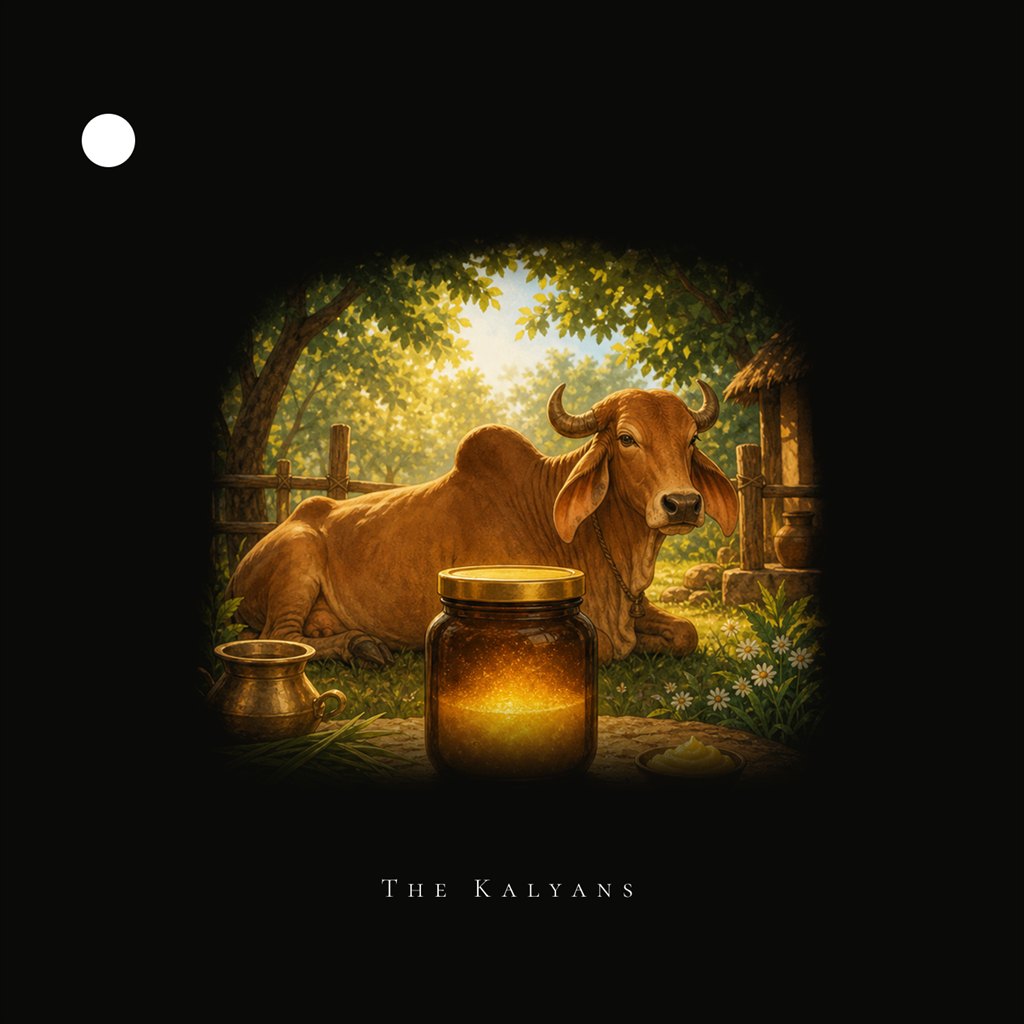
A2 Gir cow ghee usually means ghee prepared from the milk of Gir cows, an indigenous Indian breed associated with A2 type milk. The phrase is popular because people are looking for food that feels closer to source, breed, and traditional dairy practice.
Still, ghee should not be sold as a miracle. A2 describes the milk source. Bilona describes the method. The final jar of ghee is clarified milk fat, so it should be judged by source, process, aroma, texture, freshness, and honesty rather than exaggerated health promises.
A2 is about milk source
A1 and A2 refer to beta-casein protein in milk. Gir cows are commonly associated with A2 milk. When a brand says A2 Gir cow ghee, the meaningful claim is that the ghee begins with Gir cow milk and is handled through a traceable dairy process.
Because ghee is made by removing most water and milk solids, the strongest reasons to choose a serious ghee are not protein claims. They are source discipline, clean milk fat, careful clarification, and a product that smells and behaves like real ghee.
Bilona is about method
In the Bilona method, milk is cultured into curd, the curd is churned to separate butter, and the butter is slowly heated into ghee. This takes more time than cream-based industrial shortcuts, but it can produce a deeper aroma and a more traditional texture.
The Kalyans A2 Gir Cow Bilona Ghee is built around that process: cultured Gir cow milk, churning, slow clarification, and small-batch attention.
How to judge good ghee
Look for a clean dairy aroma, golden colour, natural grainy or semi-grainy texture, and a taste that does not feel flat or oily. Also look for restraint in the brand's language. Good ghee does not need impossible promises to earn a place in the kitchen.
For a process comparison, read Bilona Ghee vs Regular Ghee. For our product standard, read Ghee Must Earn Its Place.
Questions Most Labels Avoid
What should I know first about The Kalyans ghee?
The Kalyans ghee is from Pune. We want buyers to judge it through source clarity, process discipline, batch handling, aroma, texture, and portion size, not through miracle-health language. A good ghee should make food better and still be used with restraint.
Are A2 and Bilona the same thing?
No. A2 refers to the milk source and beta-casein type. Bilona refers to the traditional curd-churning process used before clarification. A product may be A2, Bilona, both, or neither, so the label should explain both source and method clearly.
Does A2 Gir cow ghee stop being saturated fat?
No. A2 source and Gir breed may matter for sourcing and identity, but ghee is still a concentrated fat and is rich in saturated fat. The WHO fats guidance summary explicitly lists ghee among foods rich in saturated fatty acids and recommends keeping saturated fat controlled.
That is why we talk about ghee as a serious cooking fat, not a medicine.
Who should be careful with ghee?
People with high LDL cholesterol, existing cardiovascular disease, pancreatitis history, gallbladder issues, or medical advice to restrict saturated fat should use ghee cautiously and follow clinician guidance. Good ghee can earn a place in food without pretending portion size does not matter.